





 Posts
Posts


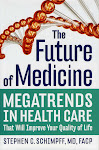
I was recently invited to present my thoughts on the Future of Medicine, based on my book of the same name, to the worldwide medical affairs group at Becton Dickinson, the giant medical device and diagnostics company headquartered in Franklin Lakes, New Jersey. Their senior vice president for medical affairs, Dr David Durack, requested that I review the basic megatrends developing as a result of the scientific advances from genomics, stem cells transplantation, vaccines, pharmaceuticals, medical devices, imaging, operating room technologies and the digital medical record. From these I proposed five basic megatrends that will significantly impact medical care moving forward – the development of custom tailored medicine; much more attention to preventive care; markedly improved ability to repair, restore and replace organs, tissues and even cells; greater safety for patients: and, finally, digital medical information instantly available anytime and anyplace.
BD had me present via videoconferencing which eliminated the need for travel yet allowed them to see me and my slides and I could see/hear them concurrently.
Their group asked many very challenging questions after my presentation and presented some excellent concepts. They suggested, for example, that in addition to positive trends that will improve medicine, I might also consider negative trends and their impact. Examples were government instability in many developing countries, climate change, and the current financial challenges. Each could and probably already has created major adverse consequences for the delivery of medical care worldwide. Another area of interest was the implication of privacy on the development of genomic information; would having genomic data determined on yourself lead to insurance denials or higher priced premiums? A real concern of many despite the legislation that passed last year to limit this possibility. And what was the scientific basis for the use of complementary medicine approaches such as acupuncture, meditation and massage? Here we discussed acupuncture for osteoarthritis, the nausea of chemotherapy and low back pain; massage for neonates in the intensive care unit and mind body approaches combined with diet, exercise and support groups for those with coronary artery disease.
The final question was what would I write differently if doing the book over again? For that one I had an answer – updates of course and some added sections on pharmaceuticals, diagnostics and nanomedicine/biomaterials. But The Future of Medicine only dealt with medical advances, not the myriad problems of getting the new approaches to the patient. There are all too many problems with the delivery of health care today and, to compound them, there are some very powerful forces that will lead to delivery changes in the coming years no matter what happens with health care reform. This bog attempts to address these.
Monday, December 14, 2009


Saturday, December 12, 2009
Misconception - “Health care reform” will improve the delivery of care and offer us better care opportunities.
In fact, healthcare reform is not about healthcare; it is mostly about paying for medical care for the uninsured and only somewhat about the rising costs of medical care. I use the term medical care here to emphasize that today American “healthcare” is all about treating disease and injury and very little about promoting wellness and preventing illness. The reforms being proposed are about addressing the financing of medical care but not the quality, the safety or the way that healthcare will be delivered nor who will deliver it given the coming shortages of professionals at all levels. Certainly it is important to assure access to care for everyone but don’t let that confuse you into thinking your healthcare delivery will be improved. It will not.
Friday, December 11, 2009
Misconception - Healthcare reform will have an impact on the advances in medical science.
This sounds logical but there are frankly amazing advances in medicine that are around the corner no matter what “reform” occurs. These advances are related to our national commitment to basic science and to engineering and computer science developments and their translation to clinical care. The National Institutes of Health, research organizations such as our medical schools, the pharmaceutical and biotechnology industries and the medical device industry are constantly bringing forth new knowledge and new approaches to care. Among them are advances in genomics, stem cells, transplantation, vaccines, pharmaceuticals, medical devices, imaging modalities, OR technologies and the digital or electronic medical record. [For more of this subject see “The Future of Medicine – Megatrends in Healthcare.”] The reforms being discussed will have little or no impact on the development of these advances; rather they are coming and they will have a major impact on the care we will receive in the near future.
Wednesday, December 9, 2009
Common Misconceptions About Healthcare Reform
American medicine must change - and the change will be both substantial and difficult to achieve but change is critical if we are to have a well functioning healthcare system that affords all of us safe, quality care at a reasonable cost in a customer-focused manner.
Today there are many misconceptions about healthcare reform - misconceptions about who will have access, how much it will cost, who will pay the bills, whether it will benefit those who currently have insurance, whether there will be good preventive care and good coordination of chronic illnesses, whether individuals will still be able to lose their insurance if they change or lose their jobs, whether Medicare benefits will be reduced, whether it will include rationing and whether there will be "death panels." Indeed the misconceptions like these and others are rampant and need to be addressed in a realistic, nonpartisan manner. I propose to explain what must change and why and then to dispel the misconceptions with straight forward factual information so that you can be properly informed. In the process I will explain the need to balance rights such as access with responsibilities such as leading a healthy lifestyle. Beginning with this post, I plan to review the common misconceptions, one or two at a time, entering a new post very few days until completed.
Misconception - America has the best healthcare in the world.
Sorry, but this is just not true. As stated before, we have a medical care system not a healthcare system meaning that we focus on disease and pestilence but not health promotion and disease prevention. We do spend more per capita than any other country but our quality does not measure up to what we spend. We have a higher infant mortality rate [6.9 per 1000 live births] than many countries [e.g., Japan – 2.8, France – 3.9] and our lifespan [77.9 years] has not kept up [Japan – 83, Switzerland – 82]. We have lifesaving vaccines available but they go unused by nearly 20% of infants. We are overweight with only about one-third of us at a healthy weight. About 20% of us still smoke. Regular exams are simply not regular and screenings for preventable or reversible problems like high blood pressure, high cholesterol and cancer are all too often not obtained. In short, the American healthcare system responds, and responds fairly well, to illness and trauma but is not focused on preventive medicine as the numbers above document. Further we do not have coordinated care for those with complex, chronic diseases like heart failure and cancer. These diseases cannot be treated appropriately with our current helter-skelter approach with independent physicians referring to each other as the situation warrants instead of a well-coordinated system for addressing all of the patient’s needs in an organized manner with multidisciplinary teams.
We have incredible resources in people, technology and infrastructure but we do not bring them to bear on the problems of healthcare delivery in an effective manner. This needs to change.
Today there are many misconceptions about healthcare reform - misconceptions about who will have access, how much it will cost, who will pay the bills, whether it will benefit those who currently have insurance, whether there will be good preventive care and good coordination of chronic illnesses, whether individuals will still be able to lose their insurance if they change or lose their jobs, whether Medicare benefits will be reduced, whether it will include rationing and whether there will be "death panels." Indeed the misconceptions like these and others are rampant and need to be addressed in a realistic, nonpartisan manner. I propose to explain what must change and why and then to dispel the misconceptions with straight forward factual information so that you can be properly informed. In the process I will explain the need to balance rights such as access with responsibilities such as leading a healthy lifestyle. Beginning with this post, I plan to review the common misconceptions, one or two at a time, entering a new post very few days until completed.
Misconception - America has the best healthcare in the world.
Sorry, but this is just not true. As stated before, we have a medical care system not a healthcare system meaning that we focus on disease and pestilence but not health promotion and disease prevention. We do spend more per capita than any other country but our quality does not measure up to what we spend. We have a higher infant mortality rate [6.9 per 1000 live births] than many countries [e.g., Japan – 2.8, France – 3.9] and our lifespan [77.9 years] has not kept up [Japan – 83, Switzerland – 82]. We have lifesaving vaccines available but they go unused by nearly 20% of infants. We are overweight with only about one-third of us at a healthy weight. About 20% of us still smoke. Regular exams are simply not regular and screenings for preventable or reversible problems like high blood pressure, high cholesterol and cancer are all too often not obtained. In short, the American healthcare system responds, and responds fairly well, to illness and trauma but is not focused on preventive medicine as the numbers above document. Further we do not have coordinated care for those with complex, chronic diseases like heart failure and cancer. These diseases cannot be treated appropriately with our current helter-skelter approach with independent physicians referring to each other as the situation warrants instead of a well-coordinated system for addressing all of the patient’s needs in an organized manner with multidisciplinary teams.
We have incredible resources in people, technology and infrastructure but we do not bring them to bear on the problems of healthcare delivery in an effective manner. This needs to change.
Monday, December 7, 2009
Mammograms as a Stalking Horse for Issues in Healthcare Reform
As we watch the reform movement in Washington, we see and hear so many misconceptions. A current one relates to mammography. A few weeks ago guidelines were published in the prestigious Annals of Internal Medicine stating, in effect, that women between ages 50 and 75 with no history of breast cancer in their family and normal mammograms to date could probably switch from annual to biannual exams. And women between ages 40 and 50 probably did not need to get mammograms as had been previously recommended unless they had certain high risk circumstances. These recommendations were made by an expert, non-partisan panel with no apparent conflicts of interest in the guidelines. The recommendations were made based on careful examination of all of the relevant data on the benefits and risks of mammography to detect early breast cancer. With a lifetime risk of breast cancer being about 9%, women need unbiased advice on what to do to detect cancer early when it is most curable. But they also need advice on when a testis not needed or can lead to unnecessary biopsies, anxieties and expense.
These newly released guidelines from the Preventive Services Task Force ignited some firestorms. The first was from various advocacy groups who have worked for years to assure that women could access mammographic screening programs annually and have the procedure paid for by insurance. Women have begun to understand the importance of routine screening and often set their exam dates by their birthday other annual event. This relatively easy approach to remembering to get a needed test has been useful but might be lost with biannual exams and this worries many advocacy groups. Second, many women chimed in saying that they developed breast cancer at a young age and it was only for the mammogram that it was found at an early stage and hence was cured. A third group, the many providers along with the manufacturers of mammographic equipment, see that reducing the frequency of mammograms will substantially impact their businesses and profits. Some smaller breast evaluation centers might go out of business altogether if procedures drop by 50% as would happen if the guidelines were fully followed. None of these groups want new guidelines that will encourage fewer women from having routine mammograms at the same schedule as formerly advised. But that was only part of the problem with the new guideline recommendations.
Those who want to defeat the current healthcare reform proposal in Congress are using these new guidelines as their "proof" that reform will mean rationing. To them, it represents the “heavy hand” of government making decisions rather than the patient or her physician. This is an excellent approach to raise high levels of concern especially in a population of individuals that tend to vote and tend to contact their elected representatives in Congress. In fact the Task Force did not suggest that insurance standards be changed although one could surmise that insurers might decide to limit reimbursement if the accepted guidelines so suggested. And so the secretary of Health and Human Services felt compelled to state that this would not impact insurance and Senator Barbara Mikulski of Maryland offered the first proposed amendment to the Senate health reform bill to prevent just such a possibility.
These firestorms erupted rapidly when in fact the new guidelines are just a reasonable attempt by a group of nonpartisan experts to offer women and their physicians the best current evidence as to what is most efficacious and least risky so that they, and they alone, can make rational decisions about care.
Truth is that medicine needs more and more efforts to assure that the care of patients is based on solid evidence. All too much of medical care is based on what we learned in medical school years ago, what we read about recently or what our personal experiences have been. This must change and guidelines from well respected unbiased experts can make a big difference in improving the quality of care.
These newly released guidelines from the Preventive Services Task Force ignited some firestorms. The first was from various advocacy groups who have worked for years to assure that women could access mammographic screening programs annually and have the procedure paid for by insurance. Women have begun to understand the importance of routine screening and often set their exam dates by their birthday other annual event. This relatively easy approach to remembering to get a needed test has been useful but might be lost with biannual exams and this worries many advocacy groups. Second, many women chimed in saying that they developed breast cancer at a young age and it was only for the mammogram that it was found at an early stage and hence was cured. A third group, the many providers along with the manufacturers of mammographic equipment, see that reducing the frequency of mammograms will substantially impact their businesses and profits. Some smaller breast evaluation centers might go out of business altogether if procedures drop by 50% as would happen if the guidelines were fully followed. None of these groups want new guidelines that will encourage fewer women from having routine mammograms at the same schedule as formerly advised. But that was only part of the problem with the new guideline recommendations.
Those who want to defeat the current healthcare reform proposal in Congress are using these new guidelines as their "proof" that reform will mean rationing. To them, it represents the “heavy hand” of government making decisions rather than the patient or her physician. This is an excellent approach to raise high levels of concern especially in a population of individuals that tend to vote and tend to contact their elected representatives in Congress. In fact the Task Force did not suggest that insurance standards be changed although one could surmise that insurers might decide to limit reimbursement if the accepted guidelines so suggested. And so the secretary of Health and Human Services felt compelled to state that this would not impact insurance and Senator Barbara Mikulski of Maryland offered the first proposed amendment to the Senate health reform bill to prevent just such a possibility.
These firestorms erupted rapidly when in fact the new guidelines are just a reasonable attempt by a group of nonpartisan experts to offer women and their physicians the best current evidence as to what is most efficacious and least risky so that they, and they alone, can make rational decisions about care.
Truth is that medicine needs more and more efforts to assure that the care of patients is based on solid evidence. All too much of medical care is based on what we learned in medical school years ago, what we read about recently or what our personal experiences have been. This must change and guidelines from well respected unbiased experts can make a big difference in improving the quality of care.
Wednesday, October 21, 2009
Chronic Fatigue Syndrome Shown to be Caused by Virus
A very recent discovery may lead to significant advances for the estimated 4 million Americans and 17 million worldwide who suffer with chronic fatigue syndrome. CSF is, like its name suggests, a persistent extreme level of fatigue that does not resolve with rest or sleep. It may also be accompanied by memory lapses and other neurological issues. All too many individuals have been branded as having a “psychological problem” and as not really being ill. No cause had been known although viral infection, immune dysfunction or both had been thought possible. There has been no specific treatment.
Now researchers at the Whittemore Peterson Research Institute in Reno, Nevada have shown that CFS is likely caused by a virus. Known as xenotrophic murine leukemia virus – related virus, or XMVR, it is a retrovirus that is suspected of being transmitted by intimate human contact. The discovery means that a definite diagnostic rest can be created. And hopefully it means that scientists will be able to shortly find or create drugs to both prevent the disease and to treat those who have it. It also means that no loner will these patients be labeled as not having a real medical problem.
The researchers’ early studies suggest that perhaps 4% of us carry the virus. If proven correct, then an immediate goal is for a quick and inexpensive test to screen donated blood so that the virus is not transmitted inadvertently via transfusions. And it raises the intriguing question of why some but not all of those infected go on to develop CSF.
In study done at the Cleveland Clinic, scientists have found the same XMRV virus in prostate cancer samples. It is too soon to say that the virus is causative; if might be just a “passenger.” Additional research will be done to make a clear determination.
Meanwhile, the Whittemore Peterson researchers have suggested a new name – x-associated neuroimmune disease [XAND], a name that clarifies that this is a real disease and suggests some of its implications.
This finding of XMRV as the likely cause of CFS is a major medical advance.
Now researchers at the Whittemore Peterson Research Institute in Reno, Nevada have shown that CFS is likely caused by a virus. Known as xenotrophic murine leukemia virus – related virus, or XMVR, it is a retrovirus that is suspected of being transmitted by intimate human contact. The discovery means that a definite diagnostic rest can be created. And hopefully it means that scientists will be able to shortly find or create drugs to both prevent the disease and to treat those who have it. It also means that no loner will these patients be labeled as not having a real medical problem.
The researchers’ early studies suggest that perhaps 4% of us carry the virus. If proven correct, then an immediate goal is for a quick and inexpensive test to screen donated blood so that the virus is not transmitted inadvertently via transfusions. And it raises the intriguing question of why some but not all of those infected go on to develop CSF.
In study done at the Cleveland Clinic, scientists have found the same XMRV virus in prostate cancer samples. It is too soon to say that the virus is causative; if might be just a “passenger.” Additional research will be done to make a clear determination.
Meanwhile, the Whittemore Peterson researchers have suggested a new name – x-associated neuroimmune disease [XAND], a name that clarifies that this is a real disease and suggests some of its implications.
This finding of XMRV as the likely cause of CFS is a major medical advance.
Tuesday, September 1, 2009
Additional Advances To Expect in Medical Care
In the last post I referred to the advances in biological sciences and some in engineering and computer science. Here are some more that will have a tremendous impact on your care now and into the future.
With the improvements in imaging devices such as MRI and CT scanners, it is now possible to do many procedures much less invasively in the radiology suite rather than in the OR as before. Uterine fibroids can be destroyed by passing a small catheter [about the size of a spaghetti noodle] into the arteries that feed the fibroid. Then small particles are inserted that block off that blood supply and the fibroid basically withers away. It is a rapid procedure with minimal recuperation time, especially compared to surgical removal of the uterus [hysterectomy.] Another example is resolving an aneurysm in the brain using similar catheters without the need for open neurosurgery.
Some tumors of the brain can be successfully treated with the “gamma knife” which is designed to give a huge dose of radiation to the tumor but not the rest of the brain. It is done in one procedure and the patient goes home the same or the next day. Other new radiation therapy procedures utilize very sophisticated equipment that can deliver the correct dose of radiation to the tumor, say in the prostate, but avoid most of the surrounding tissue such as the rectum and bladder. This makes the treatment more effective yet with fewer side effects.
Slowly but surely, all medical information is being digitized. As this happens it will be finally possible to have a total electronic medical record. This will mean your medical data is available anyplace, anytime. And it will mean that if you are sent to a specialist that your CT scan is available on line and you will not have to go to the radiology office to get it before visiting the specialist. This will save you time; the specialist can make an informed opinion immediately and will mean reduced costs. There are some important hurdles to overcome before this will be a reality but I am confident that they will be solved relatively soon.
With these and other advances medical care will be more custom tailored just for you; there will be a greater focus on prevention; it will be possible to repair, restore or replace a damaged organ; your medical data will be instantly available and medical care will be safer. Big advances.
With the improvements in imaging devices such as MRI and CT scanners, it is now possible to do many procedures much less invasively in the radiology suite rather than in the OR as before. Uterine fibroids can be destroyed by passing a small catheter [about the size of a spaghetti noodle] into the arteries that feed the fibroid. Then small particles are inserted that block off that blood supply and the fibroid basically withers away. It is a rapid procedure with minimal recuperation time, especially compared to surgical removal of the uterus [hysterectomy.] Another example is resolving an aneurysm in the brain using similar catheters without the need for open neurosurgery.
Some tumors of the brain can be successfully treated with the “gamma knife” which is designed to give a huge dose of radiation to the tumor but not the rest of the brain. It is done in one procedure and the patient goes home the same or the next day. Other new radiation therapy procedures utilize very sophisticated equipment that can deliver the correct dose of radiation to the tumor, say in the prostate, but avoid most of the surrounding tissue such as the rectum and bladder. This makes the treatment more effective yet with fewer side effects.
Slowly but surely, all medical information is being digitized. As this happens it will be finally possible to have a total electronic medical record. This will mean your medical data is available anyplace, anytime. And it will mean that if you are sent to a specialist that your CT scan is available on line and you will not have to go to the radiology office to get it before visiting the specialist. This will save you time; the specialist can make an informed opinion immediately and will mean reduced costs. There are some important hurdles to overcome before this will be a reality but I am confident that they will be solved relatively soon.
With these and other advances medical care will be more custom tailored just for you; there will be a greater focus on prevention; it will be possible to repair, restore or replace a damaged organ; your medical data will be instantly available and medical care will be safer. Big advances.
Subscribe to:
Posts (Atom)
