
Thursday, July 18, 2013

The Strength To Accomplish Incredible Things


Illnesses, like cancer, can be devastating but hope springs eternal and love and caring can be healing no matter what the final outcome. Fortunately in this family crisis, the outcome was incredibly positive in many ways and led to the strength to accomplish incredible things. My posts are usually my own work. But I am posting this very beautiful and positive story sent by a husband turned caregiver. 

“Lessons Learned through Caregiving

In August of 2005, my family changed forever. Our daughter, Lily, was born, and my wife Heather and I could not have been more excited to be new parents. However, three months later, our lives changed again. On that day, Heather was diagnosed with malignant pleural mesothelioma, and I got a new, unexpected job. I became a caregiver for a cancer patient. Instead of dealing with the chaos of the holiday season as planned, we began to deal with a new type of chaos – fighting cancer.

My life as a caregiver began as soon as Heather was diagnosed. Completely overwhelmed, shocked and unable to make any decisions, Heather looked at me for help. I knew I had to be there for her as best I could, and I made the first essential decision, that of where Heather would receive treatment. We were given several options, but one in particular stood out.  It was Dr David Sugarbaker, a mesothelioma specialist in Boston, known for his work with patients with my wife’s type of cancer. I told our local doctor to get us to Boston. 

I had to cut my hours in my full-time job, and Heather left her job. Instead of working my 9-5, I turned into a full time caregiver. I scheduled our trips and drove to doctors’ appointments. I was also still a full-time dad, caring for three month old Lily.

Life became a challenge. Everything was turned upside down, and I was often uncertain and worried. My to-do list turned into a whirlwind of overwhelming emotions, and I couldn’t just give up. I let myself surrender to the bad days, but I never gave up hope. Although I often felt helpless, I knew I had to stay strong for Heather. The support we received made me feel hopeful. People we didn’t even know were offering all kinds of help, giving us less to be anxious about. That outpouring of support helped keep me sane.

All of our hard work, perseverance, and refusal to give up paid off. After surgery and multiple treatments for mesothelioma, Heather beat the odds as this short video demonstrates and defeated this awful disease, a rare feat accomplished by far too few. After seven years, she is still cancer free, and has been able to see Lily grow into a beautiful young lady. 

I have since been able to balance the tasks of going back to school while raising a family. Being a caregiver and standing by my wife through cancer gave me the strength and the courage to pursue this dream of mine, two years after Heather’s diagnosis.  The stress and time management skills that I learned helped me to succeed and graduate with high honors.  I was even given the great privilege of speaking at graduation. During my graduation speech, I shared the greatest lesson that I learned as a caregiver to someone with cancer. I told the audience that within each of us is the strength to accomplish incredible things, as long as we never give up hope, and always keep fighting for the ones we love.”  

Cameron Von St James, July 17, 2013


Saturday, July 6, 2013

The Coming Disruptive and Transformational Changes in Health Care Delivery


There will be some very disruptive and some transformational changes in the way health care is delivered, not as a result of reform, but as a result of the drivers of change described previously. They included an aging population, an obese society, shortages of doctors, and emerging consumerism, among others.                       

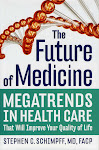
I interviewed in depth about 150 medical leaders from across the United States to collect information and then distilled it down to a few key observations for my book “The Future of Health Care Delivery - Why It Must change And How It Will Affect You.”. 

As a result of those previously discussed drivers of change, here is some what we can expect to occur in the coming years. 

First, there will be many more patients needing substantial levels of medical care. These won’t be just any patients but two specific groups that are growing rapidly. Americans are aging. “Old parts wear out” and there are impairments in vision, hearing, mobility, bone strength, dentition and cognition that become more prevalent with age. And of course our society has many adverse lifestyles such as consuming too much of a non-nutritious diet, being sedentary, being chronically stressed and 20% still smoke. These all lead to chronic illnesses like diabetes type II, heart failure, cancer, chronic lung and kidney disease, etc. So there will many more individuals with chronic illnesses. The especially sad thing is that many of these individuals will be moderately young as a result of obesity since one third are overweight and another one third are frankly obese. (And now that the AMA has specifically listed obesity as a disease rather than just a predisposer to disease, then the number of Americans with chronic illnesses jumps dramatically.) This increase in chronic diseases and the impairments of aging will have huge impacts on care delivery.           

Of course, more and more care is and can be done out of hospital. But with many more patients in need of care for serious chronic illnesses, there will be a need for more high tech hospital beds, ICUs, ORs, and interventional radiology. This is different than the mantra of recent decades which proclaimed that there are too many hospitals and too many beds. Now it is the just the reverse. This too is a big change. 

But building new hospitals or new wings or renovations costs a lot of money. So does technology such as the electronic medical record, new CT or MRI scanners, and the needed technology for the operating rooms or radiation therapy equipment. To garner the required money, hospitals will need to access the capital markets. What will smaller hospitals do that have less ability to enter the credit markets? Merge with larger systems to get access to capital. So there will be more and more smaller hospitals merging into larger systems. Indeed there will be few stand alone community hospitals in the coming years. This is quite a disruptive change. 

There is already a shortage of primary care physicians and this will undoubted accelerate since few are entering primary care today after medical school and training.  In part to compensate, there will be greater use of NPs and PAs, especially in primary care. Notwithstanding the debate as to whether NPs can serve as well as MDs in primary care, they can be very effective and allow the MD to do what he or she is best at doing. Together they can create an excellent team.  

Primary care doctors are caught in a catch 22. They are in a non sustainable business model. Reimbursements from insurers have stayed level for years but office and other expenses have gone up each year. So in order to keep their personal income at least flat, they need to “make it up in volume” by seeing more patients. This means no longer visiting their patients in the hospital and in the ER. Instead they wait for the hospitalist or the ER doctor to call with reports. And they shorten the time with each patient so they can see 24 to 25 patients or even more each day.  

But seeing this many patients means they cannot give comprehensive preventive care  and cannot adequately coordinate the care of their patients with chronic illnesses – two of the key things a PCP should be doing for optimum quality care. It is the absence of time – time to listen, time to prevent, time to coordinate and time to just think – that is the critical issue. 

There are at least two approaches PCPs are taking to counter this dilemma. One is to no longer accept insurance and rather expect patients to pay a reasonable fee at each visit. Pay at the door. It cuts out a lot of haggling with the insurer and means they can spend more time with the patient. Importantly, it recreates a normal, typical professional-client relationship since the patient, not the insurer, is paying the doctor directly.  But this is certainly a disruptive change to not accept your insurance! It is like going back a few decades.   

Another approach gaining rapid popularity is to switch to retainer based practices, sometimes called concierge or boutique practices. The basic concept is to limit one’s practice to 500 patients rather than the typical 2000 or more. This means more time per patient. So in return for a fixed fee of about $1500-2000 per year the PCP agrees to be available by cell phone 24/7 and by email. He or she will see you in the office within 24 hours of a call. You get as much time as needed for the problem at hand. And the PCP will visit you in the hospital, the ER or the nursing home – maybe even do a house call.

The result is better quality. But there is more. Since the doctor now has the time – the patient now gets much more preventive care attention. And if a patient has a chronic illness, the PCP will take the very real time needed to coordinate that care. This will mean much better care from the specialists and will avoid unnecessary tests, scans and procedures. Better care at less expense.  – One more very disruptive and I would say transformational change occurring in medical care delivery.


Sunday, June 30, 2013

A Vision For Health Care In America


In researching  The Future of Health Care Delivery – Why It Must Change and How It Will Affect You, I had in depth interviews with over 150 leaders from across the country including hospital CEOs and COOs, practicing community and academic physicians in both primary care and specialty areas, pharmacists, nurses, insurance executives, health care consultants and many others. But I found what I think is a very good vision and resulting model right at home in Howard County, Maryland.

County Executive Ken Ulman and former health officer Peter Beilenson, MD, MPH created “Healthy Howard” to assist those without insurance.  Their concept was to provide primary care access for all, an extensive network of specialists, community and tertiary care hospitals and a basic electronic medical record. Methods were built in to maintain costs as low as possible. But part of the basic premise was that with these “rights” for the patients came certain “responsibilities” – some limited payment participation and some requirements toward practicing healthy living as well as compliance with treatment recommendations. It structured a good balance between patient rights and responsibilities, between care delivery and a working payment system, between access and effective care.

Howard County, between Baltimore and Washington, is a fairly affluent county with excellent providers and a highly regarded community hospital. Despite affluence, there are uninsured individuals and families. Some could afford insurance but choose to spend their dollars elsewhere. Some are the young invincibles who don’t feel they need it. Others work in the service industry where their employer does not provide insurance and they cannot afford to carry the entire burden. And some are simply indigent.  The question was how to provide for this disparate group in an effective yet equitable manner that would render good quality care at a moderate cost.

Healthy Howard is a county-assisted, community based not for profit organization which collects a modest fee, on a sliding income scale, from its members. In return, each individual gets unlimited access to a primary care physician (PCP). The office employs a care coordinator who works with the PCPs to assist those patients who have complex chronic illnesses such as chronic lung disease, cancer, or diabetes with complications. There is also a pharmacy benefits manager located in the PCP office to assist patients find drugs at the most reasonable price in the community. They work with the physicians to find generics, discuss other effective agents with the doctor or even contact the manufacturer if appropriate to get a reduced price for an indigent patient.

Of course some patients will need to see a specialist physician. Healthy Howard has developed an agreement with the county’s specialists to accept, gratis, these patients with the understanding that the program will allocate the patients across all the specialists in a given field (e.g., cardiology or orthopedics) so that no one physician has an excessive burden.  Howard County General Hospital, being part of a unique system in the state of Maryland, has always accepted indigent patients but under the agreement with Healthy Howard, the hospital forgoes any attempt to collect from these patients.  Further, since the hospital is part of the Johns Hopkins Health System, an agreement was reached with Hopkins to accept any patient that needs tertiary care at no charge.

These might be termed the “rights” of the patients. But there is also some participation required in order to be part of Healthy Howard; these are the corresponding “responsibilities. In addition to the modest sliding scale fee, each patient is assigned a health coach with whom he or she must meet on a regular basis. The coach works with the patient to develop a plan for healthy living. This might include attending a smoking cessation program, attending a gym for exercise or working on a diet plan. Together patient and coach develop a plan of action with benchmarks at various intervals. The patient meets with the coach periodically to compare actual results to the benchmarks.

The coach is there not just to measure results but to assist and to help break down barriers. Sometimes just some encouragement is all that is needed; sometimes referral to a specialist such as a nutritionist is helpful; and sometimes a more involved approach is required. As Mr. Ulman described to me, imagine an overweight lady who wants to participate in a fitness program at the local health club – to which Healthy Howard has worked out a special free arrangement. But she says cannot attend because her daughter is a single working Mom and so she, the grandmother, must babysit the child. No problem, the coach finds a fitness center that also has built in day care, breaking down the barrier that had to date prevented success.  The idea is that the plan will help overcome barriers yet still expect responsibility to meet objectives.

Healthy Howard, as its name implies, will mean healthier participants a few years down the road. The primary care physicians, with help from the coaches, will give attention to prevention thus lessening the burden of chronic illness in the future. And they will give careful care coordination for those with chronic illnesses now- thus lessening the current cost burden by reducing the need for specialist visits, excess tests and imaging and unnecessary drugs

And it worked. Now a few years in, there has been a 35% reduction in ER visits and a 50% decline in hospital admissions. Enrollees are healthier and more behaviorally motivated to maintain good health. Sufficient success to substantiate the awarding of a federal contract to utilize these principles  to create a state-wide consumer operated health insurance plan (a CO-OP) for the ACA Maryland insurance exchange based on the principles of 1) having the vast majority of care provided by primary care, 2) using bundled or capitated provider compensation and 3) using evidence-based medicine.

Healthy Howard, as its name implies, means healthier participants. Its great value is as a vision of health care delivery that incorporates improved quality, reduced costs and excellent access in return for a modest fee and a commitment to living a reasonably healthy lifestyle. Rights and responsibilities working together. It is a good vision to use as a starting point.

Saturday, June 1, 2013

Further Disruptive Changes in Health Care Delivery


Technology to lower costs rather than accelerate them. Smart phones to increase physician and other providers’ productivity. Fewer primary care physicians but more involvement by nurse practioneers and others. And increasing appreciation of the value of integrative medicine. These are but a few of the disruptive changes in care delivery that are coming. 

In my last post I observed that  the health care delivery system will change in coming years – quite unrelated to reform – and gave the most important drivers of change and how these changes will often be disruptive, transformative or both. Here are a few more. 

We think of new technologies as exacerbating health care costs. But it is also quite correct to look to technology to reduce costs or at least slow the growth of expenditures. There will become a new value proposition for technology. Today and tomorrow technology wil be accepted if it to helps health care professionals to 1) compensate for shortages, 2) enhance their responsiveness to patients 3) control costs and 4) improve quality and safety. 

Smart phones with wireless connectivity and multiple apps are a good example of technology to assist, compensate, enhance responsiveness and improve quality. Increasingly, physicians are becoming very reliant on their phones as a shortcut to knowledge, to stay well informed, to argue and debate among themselves and perform many other functions. 

Robotics can likewise benefit all four parameters. A good example is how robots have made the hospital pharmacy more efficient while substantially safer. One robot selects pills via bar code; another prepares intravenous medications and solutions more accurately then a technician and a third transports medications to the nursing unit using wireless technology – sort of like R2D2. This frees up the pharmacist to do what he or she does best such as watching for drug-drug interactions, proper dosing, and critical higher order functions.  

But the coming changes are not just in technology but in the distribution and work of providers. With shortages of physicians, especially primary care physicians, appropriate integration of nurse practioneers and physician assistants can not only partially compensate but provide quality interaction with patients, augment preventive programs and enhance care coordination for those with chronic illnesses. And although there is considerable controversy as to appropriate scope of practice, it is certainly clear that the interaction of PCPs with NPs and PAs can enhance the totality of patient care.  Similarly, expect to see more mental health delivered by psychologists and social workers; visual care by optometrists; and hearing care by audiologists. 

Consumers (patients) will press for and expect a more integrative approach from their PCP and other providers. Patients today increasingly search out and use practioneers of acupuncture, massage, chiropractic, yoga, mind body techniques, energy channeling (Healing Touch, Therapeutic Touch, and Reiki) and other complementary medical modalities. More and more medical students are graduating with at least some understanding and training in the use of these approaches. And the acceptance by already practicing physicians is growing, albeit slowly in many cases.  

Integrative medicine means more attention to the whole person – family history, social situation, work environment, and how all of these plus stress, eating, smoking and drug preferences interact with the patient’s illnesses. A “prescription” for high cholesterol may still include a statin but it might well also include a trip to a nutritionist, a personal trainer, a program for stress reduction, etc. The end result is better medicine yet completely coordinated by the primary care physician.  

Health care delivery is transforming. It will come in fits and starts but it is and will continue to change. Hopefully most of the changes will be for the betterment of patients and providers alike.


Monday, May 27, 2013

Transformational and Disruptive Changes to Healthcare Delivery


More chronic illnesses, more old age impairments, consumers demanding more quality and convenience, physicians no longer in typical private practice, and high deductible health care polices are each about to cause major changes in the practice of medicine and how it is delivered to patients.  

Health care delivery will change substantially in the coming years. This is not because of reform but rather due to a set of drivers that are exerting a great push and pull to the delivery system. Some of these changes will be quite transformational and some will be very disruptive of the status quo. What are those drivers?

One of the most important is that there will be many more individuals with chronic illness. The Milliken Institute offered a white paper a few years ago on chronic illnesses and noted that nearly one half of Americans had one or more chronic illnesses, most of them preventable and  which were costing the economy over $1 trillion per year and rapidly rising.  

These are diseases like diabetes with complications, heart failure, cancer, or chronic lung disease. What is apparent is that they are mostly due to adverse lifestyles. Eating a non-nutritious diet -- and too much of it combined with a sedentary existence leads to obesity. One third of Americans are overweight and another one third are frankly obese. Add to this chronic stress and that 20% still smoke and there is an effective recipe to produce chronic illnesses. Chronic illnesses will make up a greater and greater proportion of all medical ailments as time goes on. And of course they are more difficult to manage, generally last a lifetime and are inherently expensive to treat (although there is much that can be done to reduce the costs of care.) 

A second driver of change is the aging of the population. The American society is growing older and just like a car:  “Old parts wear out.” Aging brings on impaired vision, impaired hearing, impaired mobility, impaired bone strength and impaired cognition among others - all as best we know today, not due to adverse lifestyles but are tied into the aging process. 

Consumerism is becoming – finally – more and more of a driver of change. Patients are coming to expect to be treated like a valued customer - “the patient is no longer willing to be patient any more.” What do the patients want? They want service, good service. They are expecting high levels of quality & safety. Most important of all is respect, respect for their person, confidentiality, and the care quality. But also patients want convenience & responsiveness. They want appointments in short order, no long times in the “waiting room,” nor put on indefinite telephone hold. They want interaction by email and other electronic methods.   And patients increasingly expect to have the information gap closed– they expect the playing field between patient and doctor to be much more level in the future. 

Professional shortages are major drivers of change in the delivery system. There have been shortages of nurse and pharmacists noted for more than a decade. There is a growing shortage of primary care physicians (PCPs) and also general surgeons. These shortages are more acute in rural and urban poor areas. 

Combined with shortages are changes in professional aspirations and lifestyles. Today physicians want and expect to have more time for family and recreation. And they no longer want to run their own private practices. They prefer to be employed with little if any administrative burdens. Indeed the number of PCPs in a typical private practice arrangement has declined precipitously in recent years.  

These are but a few of the drivers that will change the delivery of health care in dramatic ways in the years ahead. I discuss them in much more detail in The Future of Health Care Delivery – Why It Must Change and How It Will Affect You with data obtained through over 150 in-depth interviews of medical leaders from across the country. Clearly physicians, patients, hospitals, insurers and employer/government sponsors will be challenged to adapt.


Friday, May 24, 2013

Caring For Chronic Illnesses Should Be Different


Our medical care system does not deal well with chronic illnesses; it really concentrates on and is best at treating acute illnesses or trauma - as it has done for the last century and more. But more and more illnesses today are chronic and complex, lasting a patient’s lifetime and bearing very high costs. And most are preventable since they are due to adverse lifestyles or behaviors like overeating, lack of exercise, stress and tobacco. 

Chronic illnesses account for over 70% of all health care costs today – diseases like diabetes, heart failure, cancer, chronic lung disease and others. The best way to care for these chronic illnesses is with a good primary care physician and a multidisciplinary team approach. This is not the typical way our medical care delivery system is organized. We tend to have a system that relies on a single provider treating an illness – the internist gives an antibiotic for pneumonia and the surgeon cuts out the diseased gall bladder. But patients with chronic illnesses often need multiple providers. For example, the diabetic may need, in addition to a primary care physician, an endocrinologist, an exercise physiologist, a nutritionist, an ophthalmologist, a vascular surgeon, a nephrologist, etc. But this team needs a coordinator or quarterback and this is preferably the primary care physician. Good care coordination can direct the patient to the care he or she needs while reducing the number of unnecessary specialist visits, procedures, tests and imaging -- with the result that the quality of care goes up and the cost of care goes down substantially.  

The multi-disciplinary team care approach is new for most providers and the way our healthcare system is organized, it is difficult to arrange. Worse, the primary care physician is always short of time – time to listen, time to think, time to give really intense preventive care and time to coordinate the care of those with chronic illnesses. Time is the missing ingredient to optimum care. 

This lack of time results in less than adequate care, less than adequate prevention and skyrocketing costs. Simply providing the PCP with sufficient time (i.e., the need to see fewer patients per day in return for the same total income) would vastly improve care and reduce overall costs. 

Chronic illnesses not only last a lifetime and are difficult of manage but are also the diseases that are driving the high cost of care. These costs can be brought down and can be brought down quite substantially through a better approach to patient care, one that gives major attention to disease prevention and intensively coordinates the multidisciplinary team approach to care for those with chronic illnesses. But for this to happen, PCPs need more time with these patients.


Thursday, May 23, 2013

Lifestyles Cause Most Serious Disease and Deaths


We all recognize that as a society we have some adverse lifestyle behaviors such as overeating a non-nutritious diet, being fairly sedentary, having chronic stress and having 20% of us still smoking. These behaviors cause the majority of the serious chronic illnesses that are rampant today– yet they are largely preventable. And it is these diseases – heart disease, cancer, chronic lung disease, diabetes, etc. - which are the major causes of death. It’s quite clear that the best chance we have for increasing our life spans and overall improving our health is to adjust our personal behaviors and to do so at an early age. 

We often think of heart disease, cancer and stroke as the major causes of death and, as diseases that cause death, which is correct. But what if we go back further and look at what caused those diseases. The rank order of causes of death according to a study from the Centers for Disease Control in the Journal of the American Medical Association lists tobacco, poor nutrition, lack of exercise, alcohol to excess, infections, toxic agents, motor vehicle accidents, sexual behaviors and illicit drug use as the primary predisposing factors to the diseases that cause death. A look at that list shows that the ones at the top of the list and a number of others all relate to our behaviors.   

The diseases that cause death have changed substantially over the decades (see “The Burden of Disease and The Changing Task of Medicine”.) At the beginning of the 1900’s it was infectious diseases that caused most deaths. Over time they came under reasonably good control with preventive techniques such as immunizations, sanitary sewer systems and clean water systems and then, of course, antibiotics. Meanwhile chronic illnesses such as coronary artery disease became much more prevalent. [See this graphic] Even though fewer people smoke than a few decades ago our obesity and our lack of exercise have led to rapid increases in diabetes, heart disease, stroke, high blood pressure and many other chronic illnesses that last a lifetime.   

What we need in America today is a focus on health care meaning a greater focus on disease prevention and health promotion beginning in childhood and a recognition that our adverse behaviors or lifestyles are the major drivers of today’s chronic illnesses – the ones that will lead to our deaths.


Praise for Dr Schimpff

The craft of science writing requires skills that are arguably the most underestimated and misunderstood in the media world. Dumbing down all too often gets mistaken for clarity. Showmanship frequently masks a poor presentation of scientific issues. Factoids are paraded in lieu of ideas. Answers are marketed at the expense of searching questions. By contrast, Steve Schimpff provides a fine combination of enlightenment and reading satisfaction. As a medical scientist he brings his readers encyclopedic knowledge of his subject. As a teacher and as a medical ambassador to other disciplines he's learned how to explain medical breakthroughs without unnecessary jargon. As an advisor to policymakers he's acquired the knack of cutting directly to the practical effects, showing how advances in medical science affect the big lifestyle and economic questions that concern us all. But Schimpff's greatest strength as a writer is that he's a physician through and through, caring above all for the person. His engaging conversational style, insights and fascinating treasury of cutting-edge information leave both lay readers and medical professionals turning his pages. In his hands the impact of new medical technologies and discoveries becomes an engrossing story about what lies ahead for us in the 21st century: as healthy people, as patients of all ages, as children, as parents, as taxpayers, as both consumers and providers of health services. There can be few greater stories than the adventure of what awaits our minds, bodies, budgets, lifespans and societies as new technologies change our world. Schimpff tells it with passion, vision, sweep, intelligence and an urgency that none of us can ignore.

-- N.J. Slabbert, science writer, co-author of Innovation, The Key to Prosperity: Technology & America's Role in the 21st Century Global Economy (with Aris Melissaratos, director of technology enterprise at the John Hopkins University).